Sunday, 26 June 2011
Smooth Passage
We've passed the halfway stage having covered over 1500 miles in 7 days. Today we sailed 247 miles. Days are spent reading, eating, sleeping and on watch with the occasional excitement of catching a fish - 2 mahi mahi yesterday.


Saturday, 18 June 2011
GALLOPING THROUGH THE GALAPAGOS ISLANDS
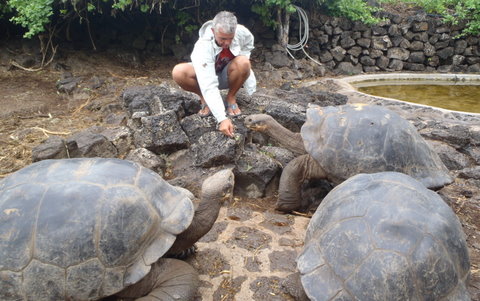

The islands are of course famous for their unique wildlife and whatever I write here is going to sound like a cliché. What we first noticed is how unafraid of humans the birds and animals are. It’s very special to get so close and, of course, makes for some amazing photo opportunities. We have been feeling like extras in Dr Doolitle or Disney's Snow White!
Within a short walk of the town, Punta Ayora, is the Darwin Institute, an active research and conservation organisation with a breeding centre for giant tortoises and land iguanas from the islands. The iguanas suffered from introduced species such as dogs. Tortoises were decimated over preceding centuries by pirates and mariners who collected them as live meat for their long passages. It’s heart-wrenching to think of these gentle creatures, which can live for up to 200 years, being treated so hideously. Heavy rain deterred “Lonesome George” from being very visible. He is the only one left from his particular type and proving reluctant to breed with tortoises from other islands. We spent a lot of time watching the antics of the youngsters in their enclosure; climbing over each other, getting turned upside down and practising some male rivalry.

Another walk took us to Tortuga Bay, a long, powdery white sand beach where we encountered hundreds of black marine iguanas snoozing in the sun. They are incredibly well camouflaged in the black volcanic rocks along the shore line, so much so that initially we walked straight past them. A spectacular grove of opuntia cactus trees, which grow out of the tuff, separated the beach from an inland lagoon.
 We were enchanted by a blue booby who was happy for us to get very close. They look like cartoon birds with their bright blue feet, almost like they have been fitted with silicon gum boots. IN the evening, we saw small sharks in the shallows of the surf possibly lying in wait for the baby turtles who, once hatched, make their way into the sea from the dunes behind.
 We were enchanted by a blue booby who was happy for us to get very close. They look like cartoon birds with their bright blue feet, almost like they have been fitted with silicon gum boots. IN the evening, we saw small sharks in the shallows of the surf possibly lying in wait for the baby turtles who, once hatched, make their way into the sea from the dunes behind.
 The fish market in town is probably the best entertainment in Santa Cruz. Dozens of pelicans hang out for tidbits of fish but pay deference to the sea lions that nestle up to the legs of the fishermen waiting for the scraps. Hours could be spend watching this scene.
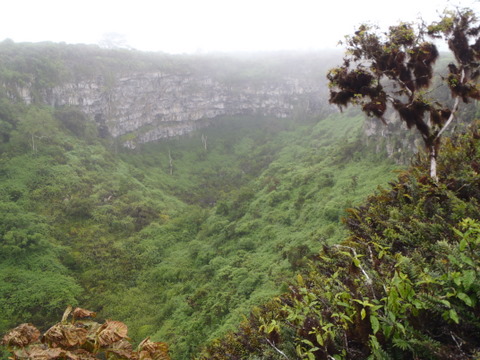 We headed inland with a taxi for a few hours to see some volcanic craters and walked through a giant lava tunnel carved out about 5 million years ago by a river of boiling rock. Our driver was actually from Cuba, married to an Ecuadorian, and proved very interesting.
Expecting over-inflated prices, we have been pleasantly surprised. Prices aren’t third world but we haven’t felt “fleeced”. There’s a great street of food stalls with tables and chairs down the middle where you can find delicious meals for around $6 with a lively atmosphere and good service. There are also some fantastic galleries and shops selling more than the average tourist tat. It's refreshing, after Panama, to be somewhere with no real crime problem. Oh yes, and there's no rubbish!
Four days are a woefully short time to spend here but it has been fantastic. Maybe we will be able to visit more islands in the archipelago when we return here with our own boat. In the morning we set sail for the Islas Marquesas, the first stop in French Polynesia. We have about 3000 miles ahead of us but, with good winds, Spiip should cover that distance in less than 3 weeks.
Wednesday, 15 June 2011
LAS PERLAS TO THE GALAPAGOS
Our stay in Contadora was brief. We arrived in the evening, anchoring in Galeon Bay but the next morning were asked to move on as our mast was causing interference for the small planes landing at the tiny airstrip behind the beach. We weren’t sorry to head off to Isla Casaya, 11 miles away, as there was too much rubbish floating in the water to warrant a swim. On exploring around the headland we also saw a pipe taking “effluent” out into the bay, not very appealing! The beach there, lined with the derelict remains of more than one fairly substantial resort hotel and an abandoned ferry, had a spooky atmosphere and we wondered what had caused its demise.


We explored by dinghy, visiting a gorgeous beach, where we finally swam in turquoise clear water, and pressing our way up a narrow, mangrove-lined river. All our repair problems seemed far away, for a moment or two. Our run of bad luck with a multitude of things breaking or ceasing to work continued with the wind instrument giving up the ghost through corroded contacts. The challenge was met and it was repaired with a sewing needle!
Our final stop was at Punta Cocos on the southernmost tip of Isla Del Rey. Very rolly, we anchored the dinghy off the beach and swam in to be met by a couple of policemen. Our worries that we were going to be asked for papers (we were already checked out in Panama City) were quickly dispelled by a friendly welcome and concern about the dinghy which they thought was floating freely. We walked to the old WWII airfield and a beach on the other side. The spectacular views were spoiled by the lovely sand littered with plastic, the scourge of our times.

The next morning we set off early for the Galapagos, relieved to be departing “Spanama”, so named for our run of bad luck. As if to herald the abundant wildlife we are expecting to see there, we saw a passing sea snake, turtles and a multitude of dolphins including one massive pod of at least 100. For quite some time after leaving the mainland we had the ubiquitous plastic floating past and a good selection of enormous logs which made useful rafts for the seabirds. At night we were surprised to have a group of seagulls swooping and soaring around the sails and navigation lights. They seemed to prefer green light to red but, if they were using it to fish, they were rarely seen to dive into the water. During the day our sentinels were happy with some squid thrown up to them that had landed on deck.
We hooked a tuna on day one and were left with only its head after a shark decided to have it for dinner. Robin also caught what looked like a 6’ marlin but it freed itself before it was reeled in.


Sunday, 5 June 2011
MOVING ON, FINALLY!
We were beginning to believe we would be stuck in Panama City forever but today we finally set sail for Las Perlas, a series of islands lying about 30 miles south east. We plan to spend a few days exploring this area before heading off to the Galapagos.

The winches eventually arrived by courier on Wednesday night. After such a long wait for them, we were devastated to find they needed modification and servicing. Nic and I took the parts off to a turners shop braving a rather unsavoury area of the city where armed police and military were out in force. The turners did an incredible job while we waited and by the end of the day Spiip once again had her full complement of working winches.

With a series of things breaking down or needing repair and attention (watermaker, generator, steering cables, etc) I was beginning to feel we were back on Irony! It doesn’t seem to matter how expensive the boat is, the problems are the same. Fortunately all parts required arrived by Saturday evening so we refuelled and were able move on this morning. On our way to Isla Contadora the mainsail was re-attached and we sailed for the first time in about a month. It was a fantastic feeling to be doing 11 knots and see Spiip fully back in action. We even managed to catch 2 fish on the journey - first an albacore tuna and then a beautiful mahi mahi which was a real treat for dinner tonight. It was sad to kill such a magnificent fish which was a vibrant green as it came out of the water, paled to silver as it died and then blushed back to a jewel-like blue.
Subscribe to:
Posts (Atom)